More mechanics, fewer carters
Clinical AI will not shrink the clinical workforce. But it will reshape who does what.
In 2016, Geoffrey Hinton stood on a stage in Toronto and said, “people should stop training radiologists now.1 It’s just completely obvious that within 5 years, deep learning is going to do better than radiologists because it’s going to be able to get a lot more experience. It might be 10 years.” Hinton is one of the people who made modern deep learning possible, and he had reason to be confident. Machines do read images very well now.
But, ten years later, we are still training radiologists. The number of active diagnostic radiology residents rose 2.93% between 2018 and 2025, according to the AAMC,2 and in the 2025 Match 97.4 percent of PGY-1 diagnostic radiology positions filled.3
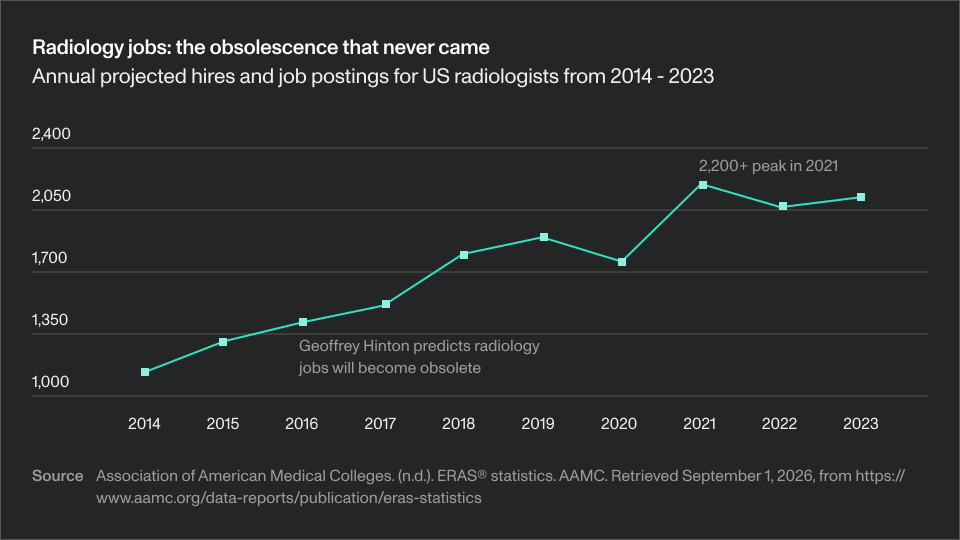
Hinton was right about the machine, but had not accounted for what a job is. A radiologist reads scans, and also protocols studies, performs procedures, consults with surgeons, communicates urgent findings, and carries the final judgment. Image interpretation is one task in that list.
Automating a task does not automate a profession: it changes the work around the task, expands how much of that work can be done, and raises the value of the judgment that can now be applied. Someone still has to decide whether an abnormality matters and own a diagnosis that leads to surgery, to chemotherapy, or to nothing at all. This is how we are likely to see clinical roles evolve as a result of clinical AI.
Tasks are exposed. Jobs are not.
Research suggests that AI is more likely to reshape work than to replace work. BCG analyzed 165 million jobs across 1,500 roles and put 50 to 55 percent of US jobs in meaningful redesign within two to three years, compared with 10 to 15 percent eliminated at a five-year-plus horizon.4 The McKinsey Global Institute finds 57 percent of US work hours technically automatable.5 Many skills will survive, but they will be applied differently.
That is not to say that every role is safe. A job made up mostly of one repetitive, rules-bound task may be at risk, and some teams will need fewer people doing the same work in the same way. The question, then, is for jobs within a health plan, which tasks are most likely to change — and how.
Care management and utilization management are two functions within a health plan that require a high level of clinical reasoning and shape the care a member receives. The former is interpersonal and proactive: nurses engage directly with members to coordinate their care. The latter happens behind the scenes: nurses review and authorize care without direct member interaction.
Ideally nurses would focus on tasks requiring a personal, human touch. Care management has a big impact on future medical expenditure, yet clinical labor is heavily concentrated within utilization management because turnaround times are regulated and the work is unavoidable. Between 2019 and 2024, the numbers of prior authorization determinations by Medicare Advantage insurers rose 42 percent to nearly 53 million.6
For each of these determinations, a utilization management nurse has to perform intake, documentation review, necessity review, provider and member communication and in some cases hand off the work to an MD. Some of this can be automated, some augmented and some has to stay human.
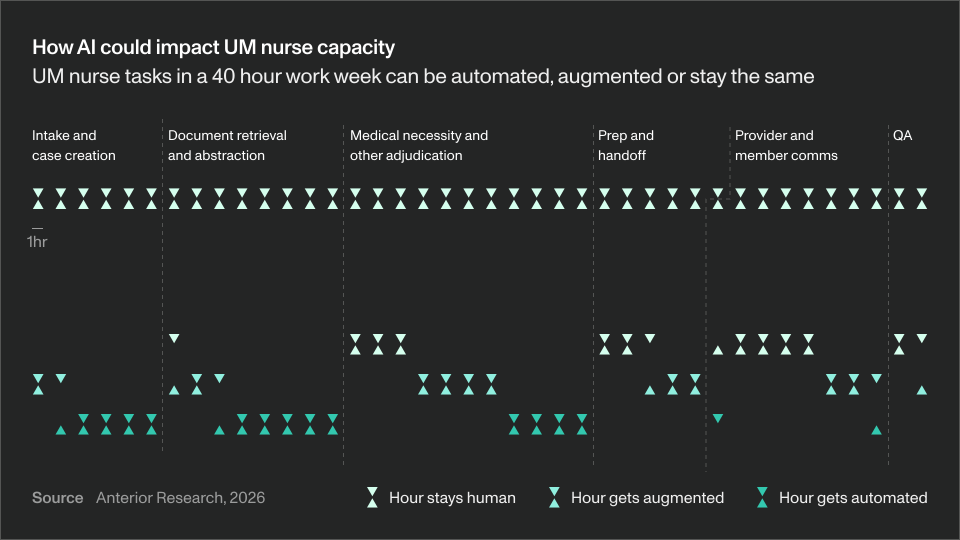
Automation and augmentation don't need to mean fewer nurses. Cheaper clinical reasoning doesn't shrink the demand for clinical labor, it redirects, and even increases use in ways that were previously uneconomic. Economists call this Jevons Paradox.7
Care management perfectly encapsulates this: it positively impacts future medical expenditure, but there were not enough nurses to fully staff it. BCG estimates that AI could increase the proportion of acute cases handled by a payer’s care-management program from approximately 50% to 90%.8 Where before clinician leaders worried about how many nurses they needed, now they can decide where their clinical judgement gets applied.
One of these leaders is Cassie Phillips, RN. Cassie was a utilization management nurse in 2024 and now directs clinical AI solutions. "Where we’re going to sit is going to be nurses looking at the more complex charts that the AI couldn’t deal with, and getting more insights to help the patient earlier," she says. "It’s really doing more case management, because you’re freed up from the really routine cases."
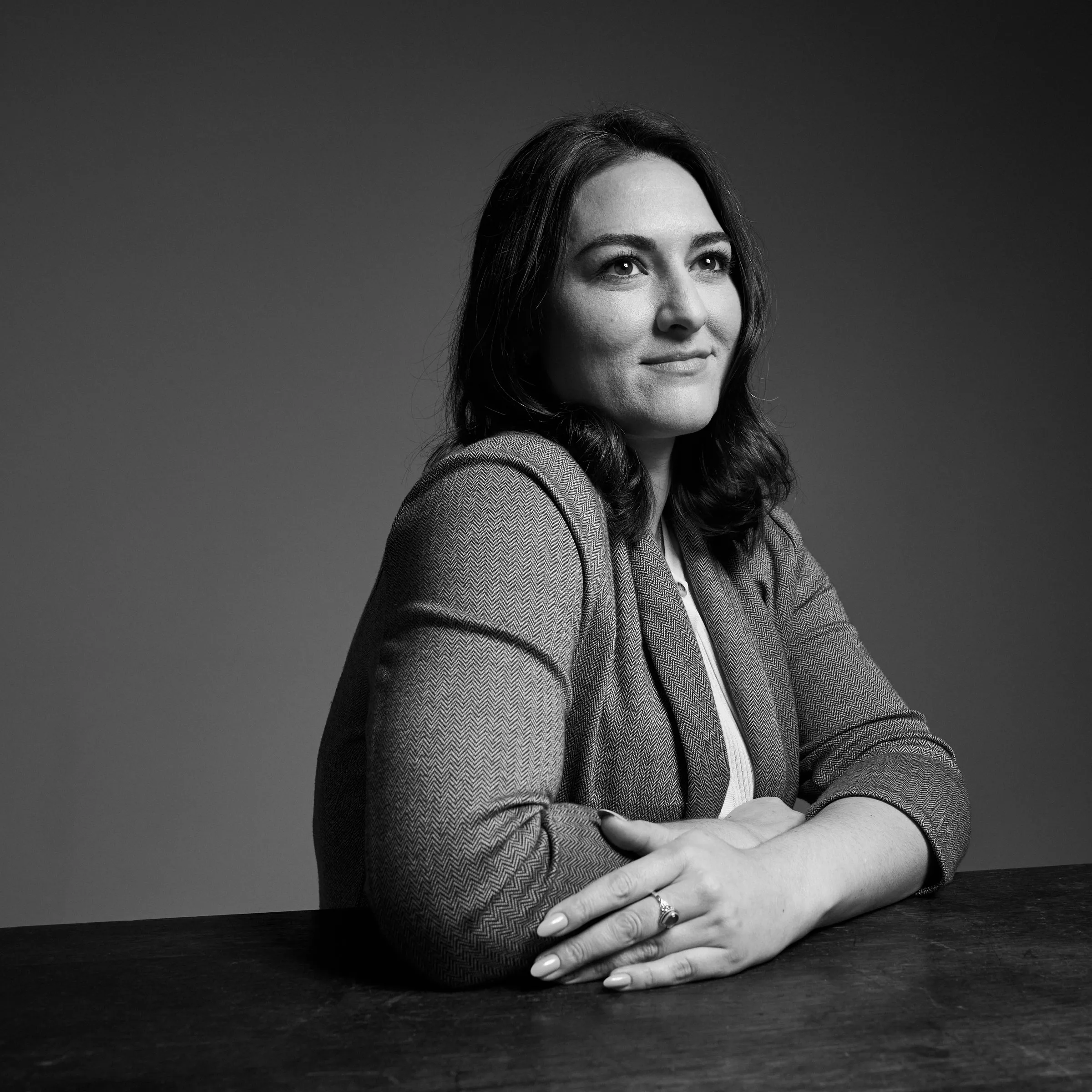
Even those no longer on the front line feel the impact. Craig Samitt, an MD and former health system and health plan CEO, says if he was still a practicing MD, the technology would allow him "to go back to where [he] started, and why [he] went into medicine in the first place,” caring for patients.
Where we’re going to sit is going to be nurses looking at the more complex charts that the AI couldn’t deal with, and getting more insights to help the patient earlier. It’s really doing more case management, because you’re freed up from the really routine cases.
These are but two voices out of the many clinicians working in the United States, but one thing is clear: AI for clinical reasoning, when used properly, improves clinician fulfillment, member outcomes, and plan economics together.
We will have to change our operating model
Most of the effort in a payer AI transformation should be focused on people, process, and organizational design. When a nurse gets time back that they previously spent on admin, they should be able to use it for proactive member care. But this is unlikely to happen organically.
Different departments have sprung up over the years to solve a specific problem. And within that, they worry about their one problem, causing silos.
Allocating that time deliberately is an org design question, and then, a talent question. We previously argued for a single reasoning layer across the member journey rather than a tool per department. If that layer holds the full picture, the departments themselves start to look like an artifact. Jen Mueller spent her career as a health plan exec and describes how they formed. "Different departments have sprung up over the years to solve a specific problem. And within that, they worry about their one problem, causing silos." The silos made sense, but the constraints that caused them to make sense no longer bind.
One health plan services executive, describing a live deployment: "Historically, our org structure has nurses in radiology, nurses in musculoskeletal, nurses elsewhere — specialists by domain. But [AI] can now cut across all of them, which forces us to ask: is that still the right structure? When we hire a nurse, do we hire a musculoskeletal-only nurse, or a more general nurse who can monitor [AI] across domains, now that [AI] has moved up the clinical complexity scale?”
In a world where AI is doing a large share of administrative work, we will have to establish new processes that maintain integrity, safety and accountability. When Mello and colleagues researched the use of AI in utilization review, they warned of toothless “humans in the loop,” where AI pre-screens and the physician reviewer anchors on its conclusion, as a major worry in utilization review, and note that 84 percent of large insurers surveyed already use AI operationally, while rigorous efficacy evidence has yet to surface9. A denial still has to come from a named human who can defend it.
What shall a health plan do? Retrain, Redesign, Recruit.
The change we are likely to go through will be uncomfortable, and there is a temptation to let the change happen as an undercurrent. But a proactive approach here is key, and there are (at least) three aspects to it:
Retrain
Before electronic health records went in at scale, there was little demand for nurses who could translate clinical practice into digital workflows, configure systems, and test implementations. The American Nurses Association first recognized nursing informatics as a specialty in 1992.10 Demand accelerated once HITECH made digital clinical infrastructure unavoidable,11 and the American Nurses Credentialing Center now reports 3,536 board-certified informatics nurses.12 That role formed because the technical environment changed.
Our nurses are being trained to use [AI] as a partner. [It] will keep recommending more and more complex things to that nurse or supervisor, who validates it and feeds that back into better, more influenced care. Both the human and the AI move up the scale together, gradually.
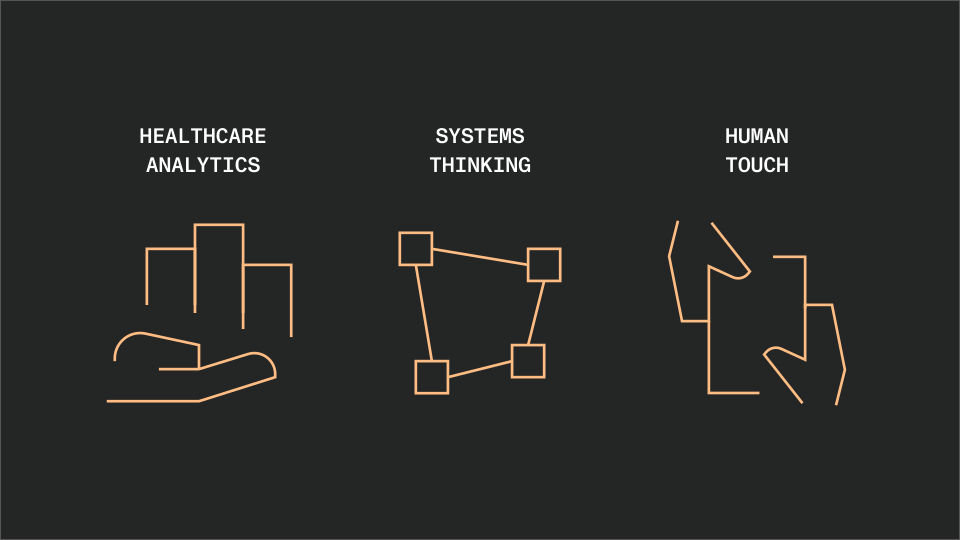
If you are a clinician in a health plan today, we believe three capabilities will matter as it goes through change:
Health analytics and informatics, because supervising a fleet of agents means reading output in aggregate and catching drift before it reaches a member.
Systems-level thinking, because someone has to map which parts of clinical work agents now do and where a human belongs in the chain.
And human touch, which becomes more valuable as clinicians move closer to the bedside, even from within the plan.
Still, retraining has limits. MIT labor economist David Autor notes that workers may stay employed but lose the market value of skills they spent years acquiring,13 and mid-career reskilling has a mixed record. Retraining works when attached to a specific, well-defined new role.14 Grant Tarbox, DO, senior executive medical director at Health Care Service Corporation, explains: "You want to have a destination in mind, not just hop in the car and drive somewhere."
Redesign
If agents do the administrative clinical work, the tasks that compose a clinician’s job change, and new tasks emerge. It is anyone’s guess what exactly these roles are likely to look like, but we think of them across two categories: “building and deploying” and “supervising and acting”.
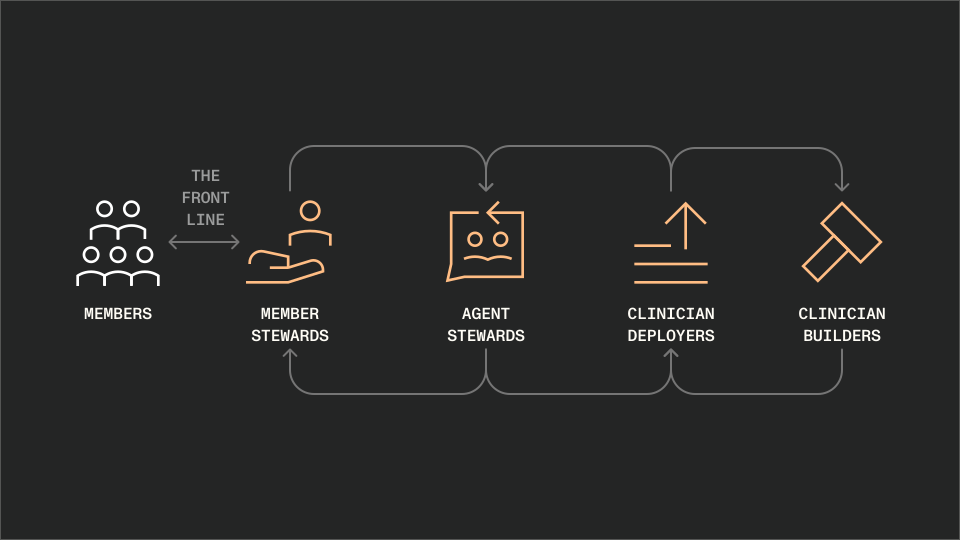
Specifically, we see four critical roles within a health plan of the future:
Builders and deployers — clinician-builders design the agents and the infrastructure around them, from evaluations to policy digitization, and clinician-deployers embed them into systems and workflows so they are connected and used.
Stewards — care stewards work the front line, talking to members and acting on what the reasoning layer surfaces, while agent stewards supervise and steer the agents, hold quality, and feed back the clinical input the models lack.
A lot of what we’re doing is tribal knowledge. It’s certainly not on the internet, so the base models don’t have a lot of what’s living in my head.
In our experience, plans underestimate the build phase, because much of what makes a utilization management nurse good was never written down.
"A lot of what we’re doing is tribal knowledge," Cassie says. "It’s certainly not on the internet, so the base models don’t have a lot of what’s living in my head." Getting that into a system is clinical work that only a clinician can do. Jen Mueller describes her team of former floor nurses as "almost like little baby engineers now."
And filling these roles will require a new type of apprenticeship model. All four roles rest on clinical experience that has thus far been acquired through having done the job. That path will change. 51 percent of organizations in a McKinsey survey say AI is reducing their need for entry-level roles,15 which have been the training ground for the roles of this future. Stanford researchers found that because of reduced hiring, employment among young people in AI-exposed occupations is 19% below where it would be if it kept pace with less-exposed occupations.16
If AI takes the routine cases and routes only the hard ones to people, the next generation has nowhere to learn the fundamentals that would let them challenge an AI answer. While preserving manual work for its own sake is likely not the right answer, plans should invest in “AI-fluency” skills. For example, making AI supervision part of clinical training: quality sampling, adjudicating escalations, tracing a wrong determination back to its source.
Recruit
Finally, plans must recruit more AI-fluent talent. Roles requiring AI skills carried on average a 62 percent wage premium.17 Plans should expect to pay competitively for scarce AI capability. There are tactical retention and attraction moves that plans can make, but primarily, you get and keep AI-fluent clinicians by being a place that genuinely intends to use the technology well rather than one optimizing for a faster horse. A reputation for this can compound, and become a differentiator.
What to ask now
We can’t quite predict the shape of the 2030 health plan workforce. But here are some questions we believe our industry should be answering:
When clinical reasoning costs falls to cents18, where does the freed clinical capacity go?
Which tasks inside each clinical role are automatable, which are accelerable, and which must stay human?
If AI holds the full member picture, do utilization management, care management, and appeals need to be separate departments?
Are you training clinicians for these roles, or hiring for them in a panic in three years?
Who within a health plan should be answering all these questions?
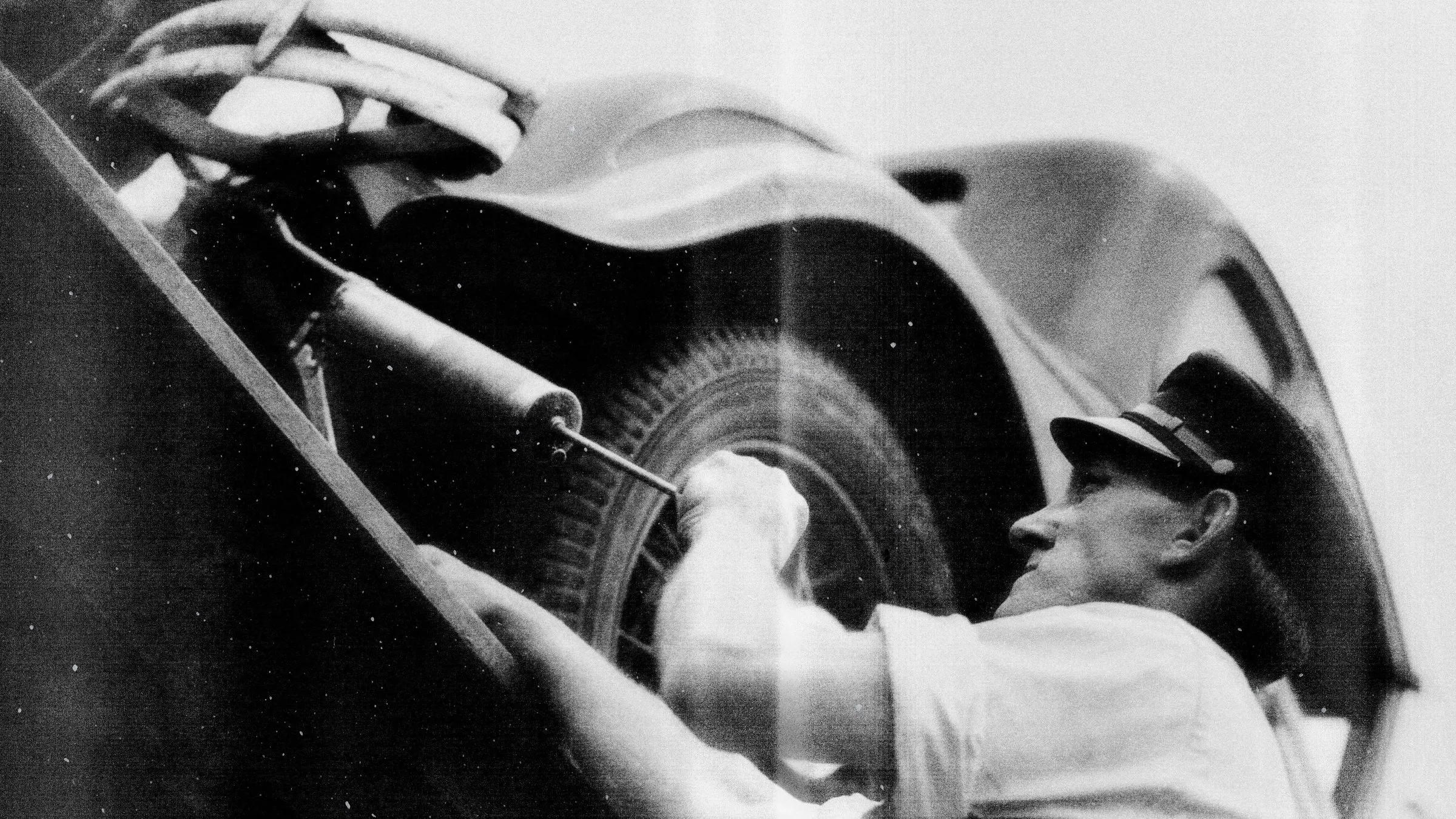
Ford did not need fewer people once the Model T sold. He needed different ones: ones outside his factory, like regulators and insurers. The automotive industry employed far more people than the one it displaced.19 The equivalent for us is a clinical workforce that gets to spend its time on members rather than paperwork.
New jobs were not sufficient, though. The Model T also needed roads, fuel stations, traffic law and insurance, almost none of which Ford built. Clinical AI has the same dependency: interoperable records, usable guidelines, providers able to exchange information, regulators willing to set rules for safe use. One can build a powerful clinical intelligence system, but it requires the entire healthcare ecosystem to ensure it will be effective.
Notes
- 1.
https://www.youtube.com/watch?v=2HMPRXstSvQ (Uploaded Nov 2016, but the conference was held October 2016)
- 2.
https://www.aamc.org/data-reports/students-residents/data/report-residents/2019/table-b3-number-active-residents-type-medical-school-gme-specialty-and-sex and https://www.aamc.org/data-reports/students-residents/data/report-residents/2025/table-b3-number-active-residents-type-medical-school-gme-specialty-and-gender
- 3.
- 4.
Boston Consulting Group. “AI Will Reshape More Jobs Than It Replaces.” BCG, April 03, 2026. https://www.bcg.com/publications/2026/ai-will-reshape-more-jobs-than-it-replaces
- 5.
Yee L, Madgavkar A, Smit S, Krivkovich A, Chui M, et al. Agents, Robots, and Us: Skill Partnerships in the Age of AI. McKinsey Global Institute, November 25, 2025.
- 6.
- 7.
- 8.
- 9.
- 10.
- 11.
Tracking labor demand with online job postings: The case of health IT workers and the HITECH act. / Schwartz, Aaron; Magoulas, Roger; Buntin, Melinda. In: Industrial Relations, Vol. 52, No. 4, 10.2013, p. 941-968.
- 12.
- 13.
- 14.
- 15.
- 16.
https://digitaleconomy.stanford.edu/publication/canaries-in-the-coal-mine-six-facts-about-the-recent-employment-effects-of-artificial-intelligence/ [Canaries in the Coal Mine? Stanford Digital Economy Lab, August 2026 update]
- 17.
- 18.
- 19.